Arapaima can grow to over 400 pounds.


For this fly fishing adventure, you'll take a 70-minute flight from Manaus, Brazil, and then a 50-minute boat ride to the floating lodge on the Mamirauá Reserve, the largest arapaima reserve in the world. The Reserve is a complex system of lakes and channels covering 4,300 square miles and is the largest protected flooded forest in the world. Here, you'll find great fly fishing for pirarucu, also known as arapaima.
2027 Rates: Packages start at $6,850 + $660 Native Comm. Fee for 8 nts / 6 days guided fishing.

Pirarucu: Pirarucu and arapaima are one and the same. Arapaima can grow to over 400 pounds. These air-breathing fish closely resemble tarpon in both size and shape. When hooked, they start to move and then explode into aerial displays and headshakes.
Guides and anglers watch for arapaima rising to the surface to gulp air. In the shallow bays of the lakes, these rolling fish offer more sightcasting opportunities than in deeper water. Similar to hunting the flats and mangroves for tarpon, anglers search the lakes, channels, and rivers for pods of fish. Be prepared. When you see rolling fish, it is usually a fish in mid-water or on the bottom that hits your fly.
The most challenging part of fishing for arapaima is setting the hook. You’ll need to get a firm hook set and maintain continual pressure. Each week, an experienced angler is likely to hook a fair number of arapaima, averaging 60 pounds.
Arowana: There’s no other place where you can catch so many arowanas on the fly. These fish (up to 10 pounds) are omnivorous and eat just about any insect or baitfish presented to them. Anglers will want to use streamers or big dry flies.
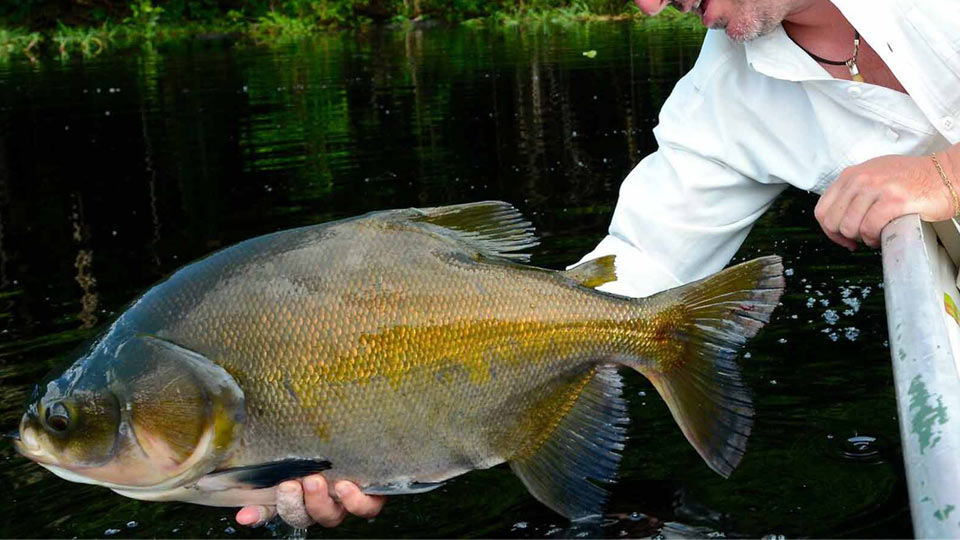
Pacu: The mighty black pacu, also known as tambaqui, is in the same family as the piranha. Pacu readily take artificial flies and put up an intense battle on a fly.
Peacock Bass: The smaller peacock bass, the yellow species, range in size from 2 to 8 pounds and act much like their larger cousins found elsewhere in the Amazon. When found, they are usually busting bait along the shorelines.

The Pirarucu Season runs from September through the end of November. November 30 marks the end of fishing due to special regulations. To protect juvenile fish, the Arapaima fishery is closed throughout the Amazon.
Guides: One fly-fishing guide and one local native guide with two anglers per guide and boat.
Boats: You'll fish from 20-foot fully equipped shallow draft skiffs. Each skiff has two large casting platforms and an electric trolling motor with a remote control for moving silently within the lagoons. 60-HP four-stroke motors, GPS, and VHF radios are on board to keep guides in contact and aware of each other’s positions.
A Fishing License is included in your package.
Fishing Equipment: Fly-fishing outfits are available for guests upon request and with 30 days' notice (Thomas & Thomas rods, Nautilus Reels, and Scientific Anglers Lines). Flies are available at camp for $5 to $15 each. Barbless hooks are required. Our confirmation packet includes a detailed list of what to bring.
A Typical Fishing Day:
5:30 a.m. - Coffee is hot.
6:30 a.m. - Breakfast.
7:30 a.m. - Head to fishing grounds.
Noon - You’ll take a 5 to 20-minute boat ride back to the Lodge for lunch and a nap.
2:30 p.m. - Fishing resumes.
6:00 p.m. - You’ll return to the Lodge.
6:30 p.m. - Cocktails and appetizers.
7:00 p.m. - A buffet-style dinner is served.

Uakari, a floating lodge, is very simple yet comfortable. The Lodge has ten floating cabins with en-suite bathrooms. Wooden walkways over the water connect each building. The main lodge features a dining room, living area, and kitchen. Solar-powered showers and comfortable beds with mosquito netting. Daily laundry service is included.
In the offseason, the Lodge is primarily an ecotourism lodge for birdwatching and wildlife viewing. It is recognized as one of the top five birdwatching areas in the Amazon.
Meals: Hearty breakfasts. Hot lunches at the Lodge. Buffet-style dinners. American and regional favorites. With advance notice, the Lodge can accommodate special dietary needs.
Alcohol: The package includes house wines, beer, and local spirits at the Lodge.
Electricity: Solar-powered electricity is only available in the dining room from 10:00 a.m. to 10:00 p.m. The lodge has 110- and 220-volt two-prong outlets. U.S. guests should bring a plug adapter to charge cameras, laptops, and other devices.
Communications: Complimentary Starlink Wi-Fi. There is no cell phone service. A satellite phone is available for guests at $5 per minute.
Non-Angler Activities: Pirarucú offers guided bird safaris, jungle expeditions, canoe tours, and visits to the local village communities, led by professional, English-speaking guides.


When you arrive in Manaus, you’ll be greeted by an English-speaking lodge representative who’ll arrange your ground transfer to the boutique hotel. The following morning, your host will drive you to the local airport for your 70-minute flight to Tefé, which is not included in the package. The flight on Azul Airlines has a strict 50-pound baggage weight limit. You’ll have lunch in Tefé before taking a one-hour fast-boat ride to the Lodge. After your arrival, you'll get in a half-day of fishing. (The ground transfers in Manaus and the first hotel night are included in the package.) The charter flight between Manaus and Tefé is not included in the package and costs approximately $250 per person roundtrip (2026).
Brazil eVisa now required: As of 2025, citizens of the United States, Canada, and Australia must obtain an electronic visa (eVisa) to enter Brazil. The Brazil eVisa fee for US citizens is $80.90.
• Click here for the Brazil eVisa website.

• One double-occupancy room at a hotel in Manaus upon arrival
• All ground transfers in Manaus per itinerary
• Guided fishing, two anglers per guide
• Lodging at Pirarucu
• All meals at the Lodge
• Beverages - wine, beer, and spirits
• Fishing license
• Fly outfits are available upon request
• Wi-Fi
• Daily laundry service
• Our eBook Fly Fishing for Peacock Bass by Larry and Guy Schoenborn
• International airfare
• Roundtrip domestic flight (Manaus/Tefe)
• Native Community Fee
• Gratuities for guides and lodge staff
• Food and beverages in Manaus
• Airport departure tax (if not included in airfare)
• Satellite phone calls, $5 per minute
• City tours in Manaus
• Extra hotel night $200 to $220
• Flies, $5 to $15 each at the Lodge
• Global Rescue coverage
• Travel insurance
• A Brazilian eVisa is now required.
• Anything not listed under inclusions.
13-Night and 10-Day Guided Fishing
Combo Season: Late August through December
Click here for the Rio Marie page.
6 days guided fishing at Rio Marie and 4 days guided fishing at Pirarucu
$14,470 + $1,310 NCF = $15,780 per person
Request an Information Packet for full details.



Free Call in the U.S. & Canada

