
Holbox Island Fishing Trip Report
May 4-8, 2026
Isla Holbox Tarpon Club

I recently returned from a fantastic fishing trip to Holbox Island, located off the northern tip of Mexico's Yucatán Peninsula. The first time I visited Holbox was back in 2012, but I only had one day to fish. This trip was different. With three full days on the water, I finally had the chance to experience what makes this destination so special.
We work with Isla Holbox Tarpon Club, where owner and head guide Alejandro Vega (Sandflea) has built a reputation as one of the area's top tarpon guides. Sandflea was out of the country during my visit, fishing Christmas Island with friends, so I spent my time on the water with his son-in-law, Carlos Ruiz Sanchez.
My trip began on May 4th with a flight from Portland, Oregon, to Cancun, Mexico. After clearing customs and having my fishing gear inspected by airport security, I was met outside the terminal by Angel, a friendly young man who would drive me on the two-hour journey to Chiquilá.
From Chiquilá, visitors take a ferry across the bay to Holbox Island. The ferry ride takes approximately 20 to 30 minutes and provides nice views of the surrounding waters. Round-trip ferry transportation costs about $35 USD. Passengers can pay in Mexican Pesos, U.S. dollars, or a credit card, with a credit card being the most convenient option.
After arriving at the ferry dock on Holbox Island, porters unloaded luggage, and side-by-side taxis were lined up to take visitors to their hotels. Some hotels also provide transportation from the ferry terminal. Taxi fares generally run about 150–200 Pesos ($9-$12 USD), depending on your destination.
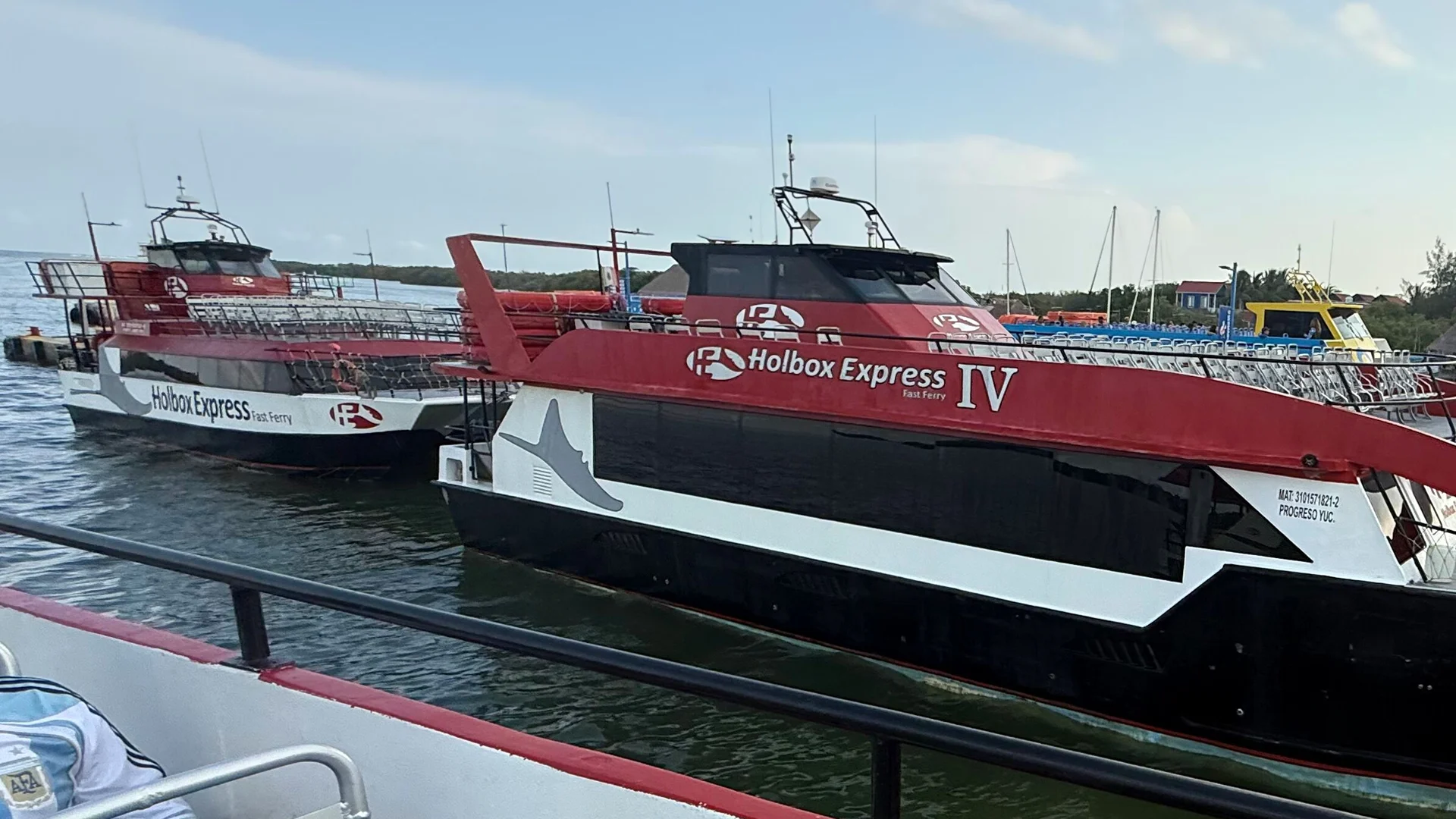
Ferry from Chiquilá to Holbox Island
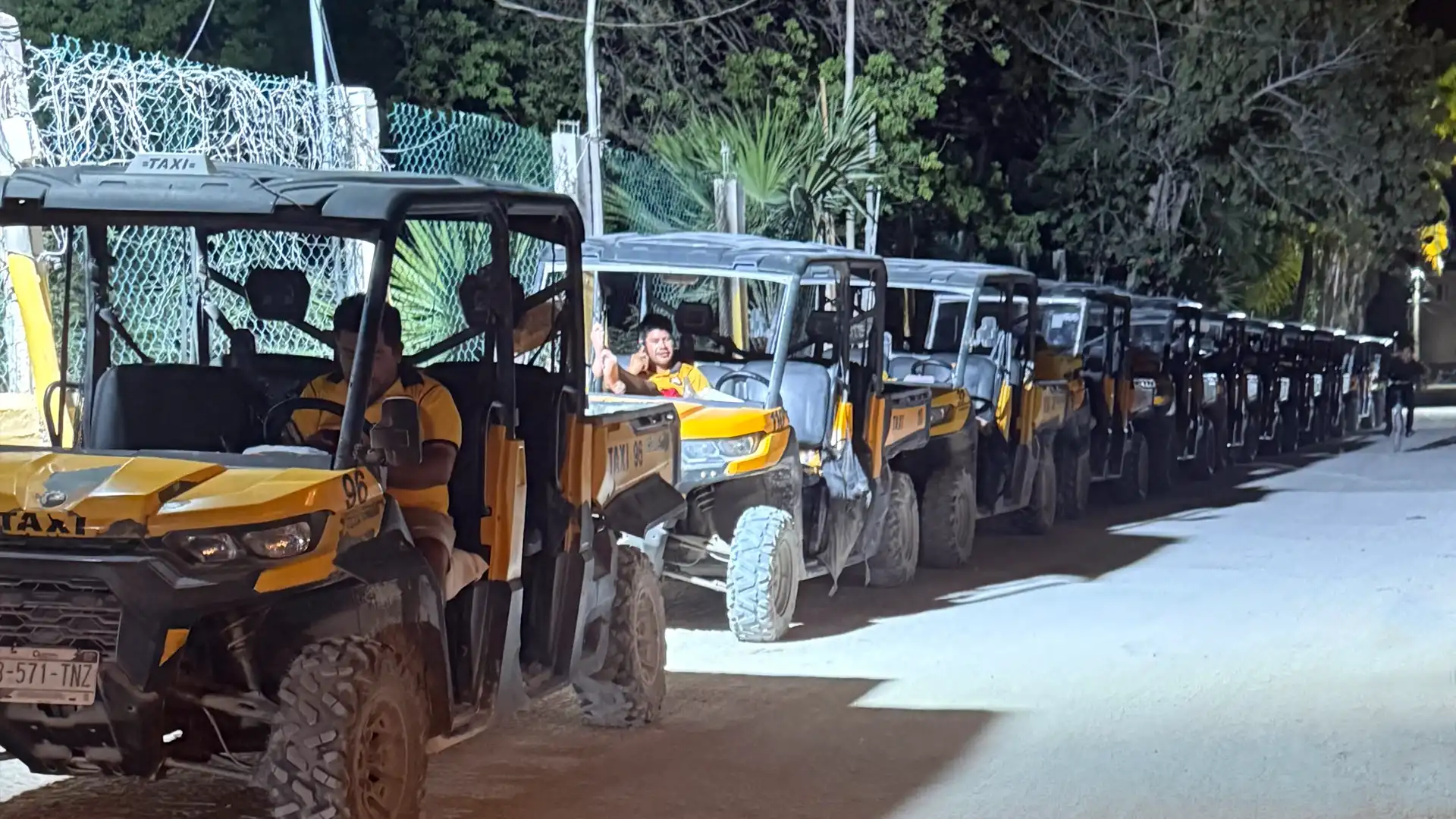
Side-by-Side Transportation on Holbox Island
For this package, you book the fishing through Fishing with Larry and arrange your own lodging. We include several hotel recommendations in our confirmation packet. On this trip, I stayed at the Iguana Hotel and was very pleased with my choice. The hotel offered comfortable accommodations, hot water, complimentary Wi-Fi, and a couple of small swimming pools. It was also within easy walking distance of the beach and the many restaurants and shops scattered throughout town.
Since I planned to meet Carlos at 5:45 a.m. each morning, I quickly discovered that coffee and breakfast were not available that early. I stopped by one of the local convenience stores the night before and picked up a few snacks to hold me over until lunch. Fortunately, Carlos was kind enough to bring me a cup of coffee each morning to help get the day started.
I met Carlos at the marina on the first morning. Since it was still dark, he called a taxi for me, which I paid for. Carlos has been guiding on Holbox Island for about 19 years, and it was a pleasure to fish with him. He provided excellent instruction on casting and retrieving flies, adjusting the speed of the strip based on conditions and how the fish were responding.
We made a 45-minute run to a series of flats that held large numbers of baby tarpon in the 4- to 12-pound range. The fish were actively feeding, and there were plenty of opportunities. Carlos suggested starting with a Gurgler, a floating fly that features a small piece of foam tied to the top of the hook. When retrieved slowly, it creates an enticing wake on the surface. I landed several tarpon before the constant action eventually tore the fly apart.
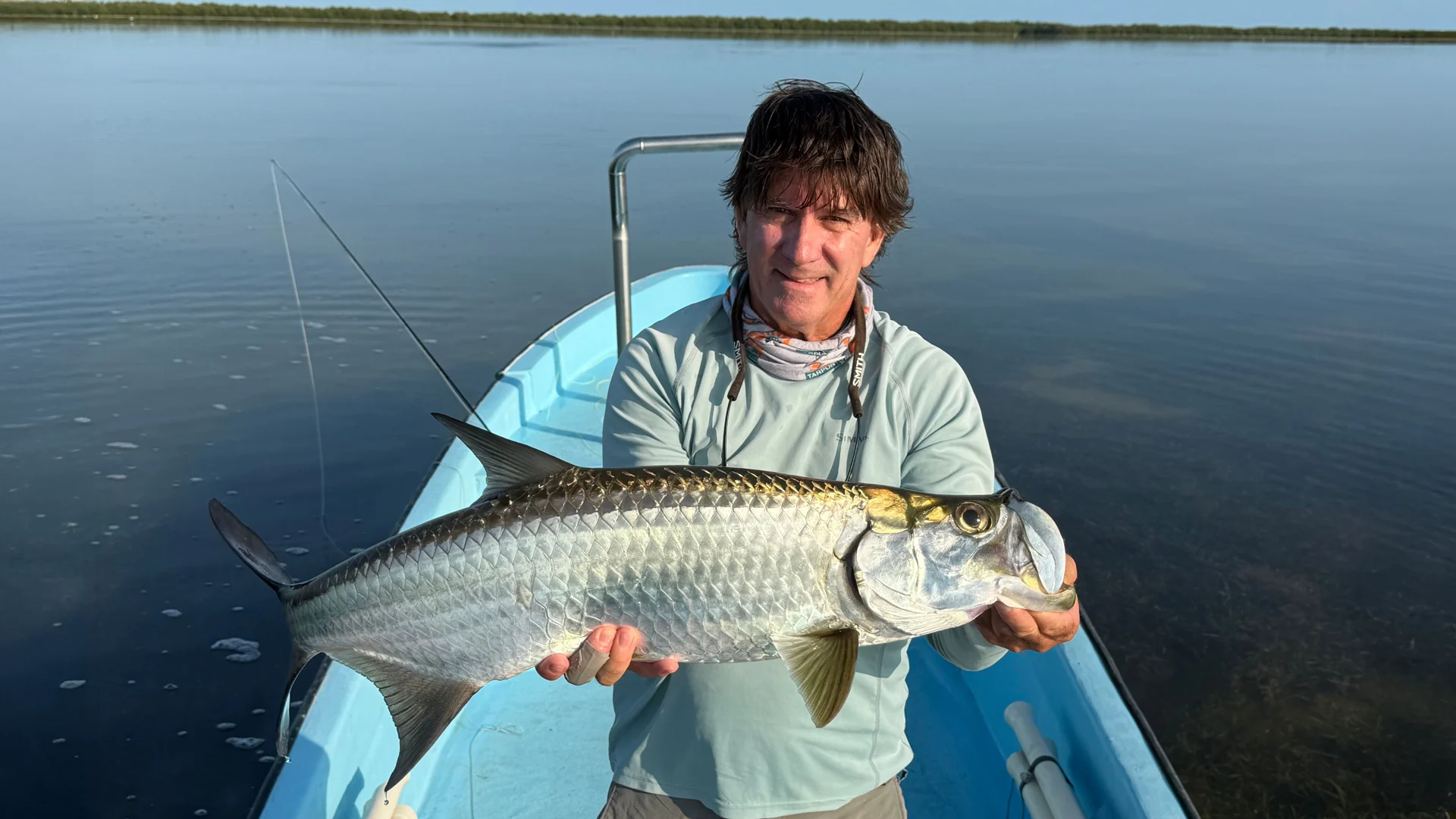
Brad with an Average-Size Holbox Tarpon
I then switched to a fly that has been productive for me for many years while fishing for tarpon in Campeche—a Todd's Wiggle Worm. The fly features a piece of white foam wrapped around the hook shank, causing it to wiggle side to side when retrieved slowly. It didn't take long before I added several more tarpon. Carlos told me he had never seen a fly like that one before.
As the tide changed, we moved into some channels that were winding through the mangroves in search of more fish. We switched to a purple Tarpon Toad, which produced a couple more tarpon. Carlos also showed me a fly pattern of his own design. He ties it with a small strip of white rabbit fur and red colored spun deer hair. It sank just below the surface and proved to be very effective.
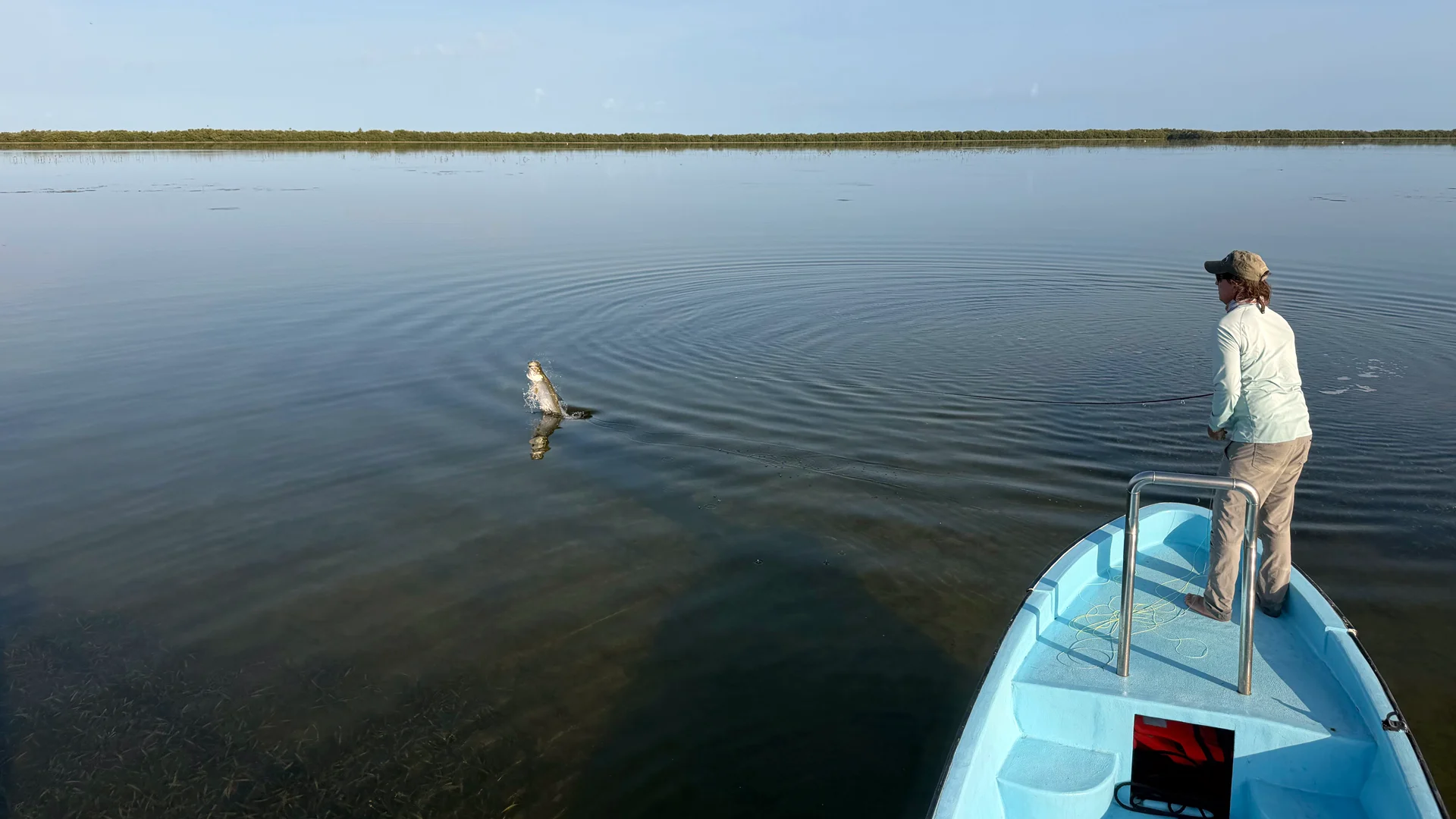
Brad Staples - (Carlos took all the photos of Brad for this report.)
Later, we moved to a large flat intersected by a deep channel where tarpon were actively rolling. I landed another fish there before I handed Carlos my rod, and he demonstrated his technique by hooking and landing one himself.
By the end of the day, I had landed nine tarpon and lost a couple more along the way—a great start to the trip.
Carlos dropped me off at the marina around 1:00 p.m., and I grabbed a taxi back to the hotel. After a shower and some work on my laptop, I headed out to explore the town.
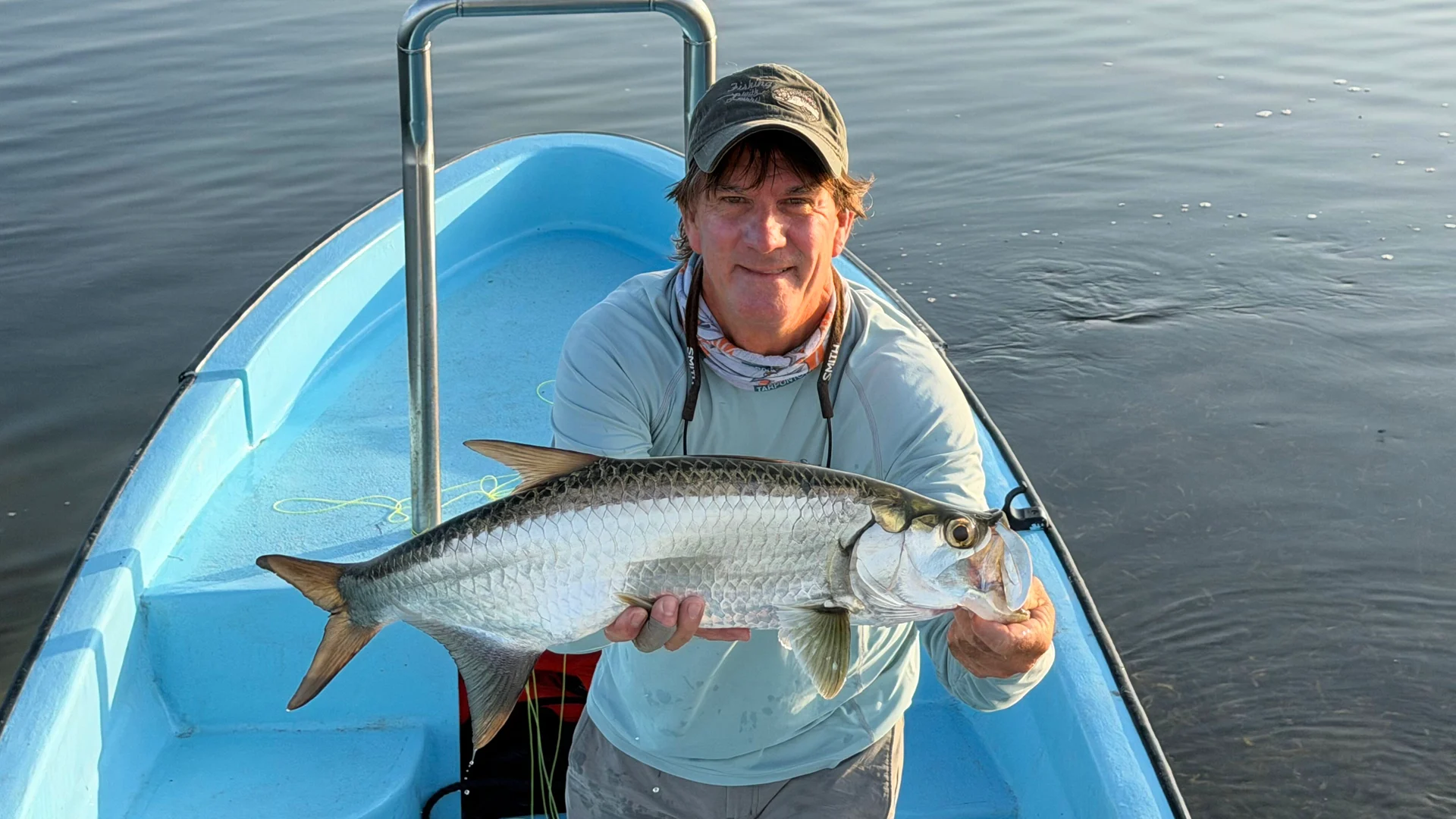
Brad Staples with a Tarpon
One of the things that makes Holbox unique is there are no paved streets. The roads are sandy, giving the island a laid-back atmosphere. It can get a little dusty when taxis, side-by-sides, and golf carts pass by, but that is simply part of the Holbox experience. Bicycles and motorcycles are also popular forms of transportation, and most visitors spend their time walking between hotels, restaurants, and the beach.
That evening, I enjoyed dinner at an Argentine-style restaurant before making the short walk back to the hotel. During my stay, I felt completely comfortable walking around the island on my own, both during the day and in the evening.
Holbox has changed considerably since my first visit in 2012. There are more hotels, restaurants, and visitors than I remember, with tourists arriving from Mexico, the United States, Europe, and Asia. Despite the growth in tourism, it did not negatively impact my fishing experience. Once we left the marina each morning, it was all about the fish.
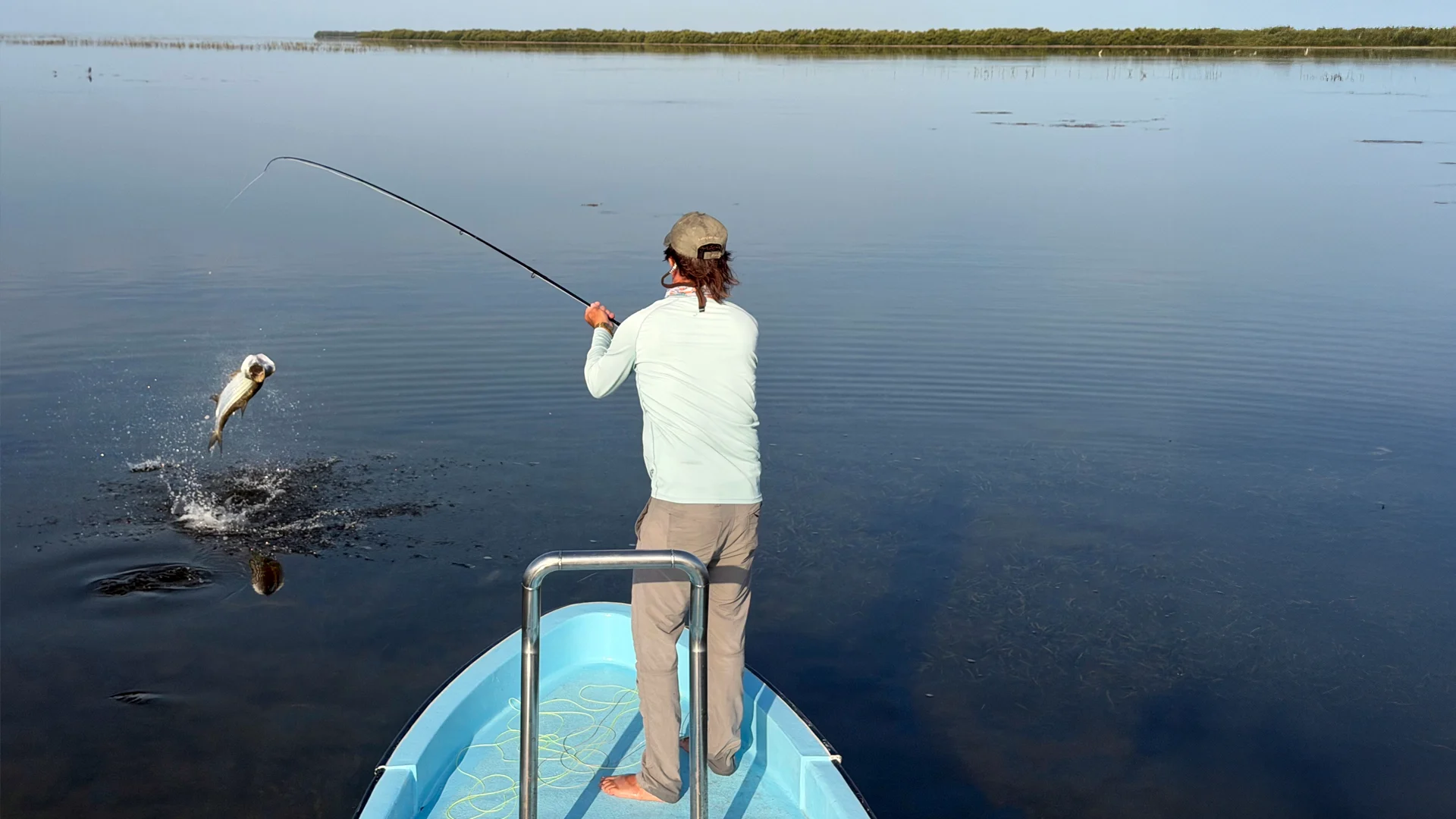
Tarpon Acrobatics
The next morning, I met Carlos at the beach, just a short walk from my hotel. His plan was to run offshore in search of adult tarpon weighing 60 pounds or more.
About 30 minutes into the trip, the boat's engine suddenly died. Carlos tried several times to restart it, but it was clear that we had a serious mechanical problem. We were far enough from Holbox that neither cell phone service nor Carlos's handheld radio could reach anyone on the island.
Fortunately, technology came to the rescue. Last year, I learned that some newer cell phones can send messages via satellite when cellular service is unavailable. Both Carlos and I had that feature on our phones. Carlos was able to send a message to his wife, who was in Merida. She then contacted someone at the Tarpon Club office and explained our situation.
Approximately 45 to 60 minutes later, one of the other guides arrived with a helper and towed us back to the beach. Once there, we quickly transferred our gear to the rescue boat while a mechanic began diagnosing the problem with the disabled engine.
With the setback behind us, we headed back out in search of adult tarpon. The unexpected delay cost us part of the morning, but thanks to a little ingenuity and modern technology, we were back on the water and fishing.
We spent the rest of the day searching for schools of rolling tarpon. The wind made spotting fish more difficult than usual, but we eventually found a few schools. Armed with a 12-weight fly rod and a 400-grain sink-tip line, I did my best to get the fly down into the strike zone.
At one point, a large tarpon exploded on the fly just off the boat. I came tight briefly, but I failed to get a solid hookset, and the fish quickly threw the fly. Carlos estimated the tarpon weighed around 80 pounds. While it was disappointing to lose the fish, seeing a tarpon of that size crash a fly at close range was still an exciting moment.
As the afternoon wore on and it became clear that our chances for another tarpon opportunity were fading, Carlos asked if I would like to target a jack crevalle. My answer was an easy yes.
Not far from where we had been chasing tarpon, we found several large schools of jack crevalle, with hundreds of fish packed tightly together. Carlos eased the boat into position, and I made a long cast into the edge of the school. The fly had barely started moving when a fish grabbed it.
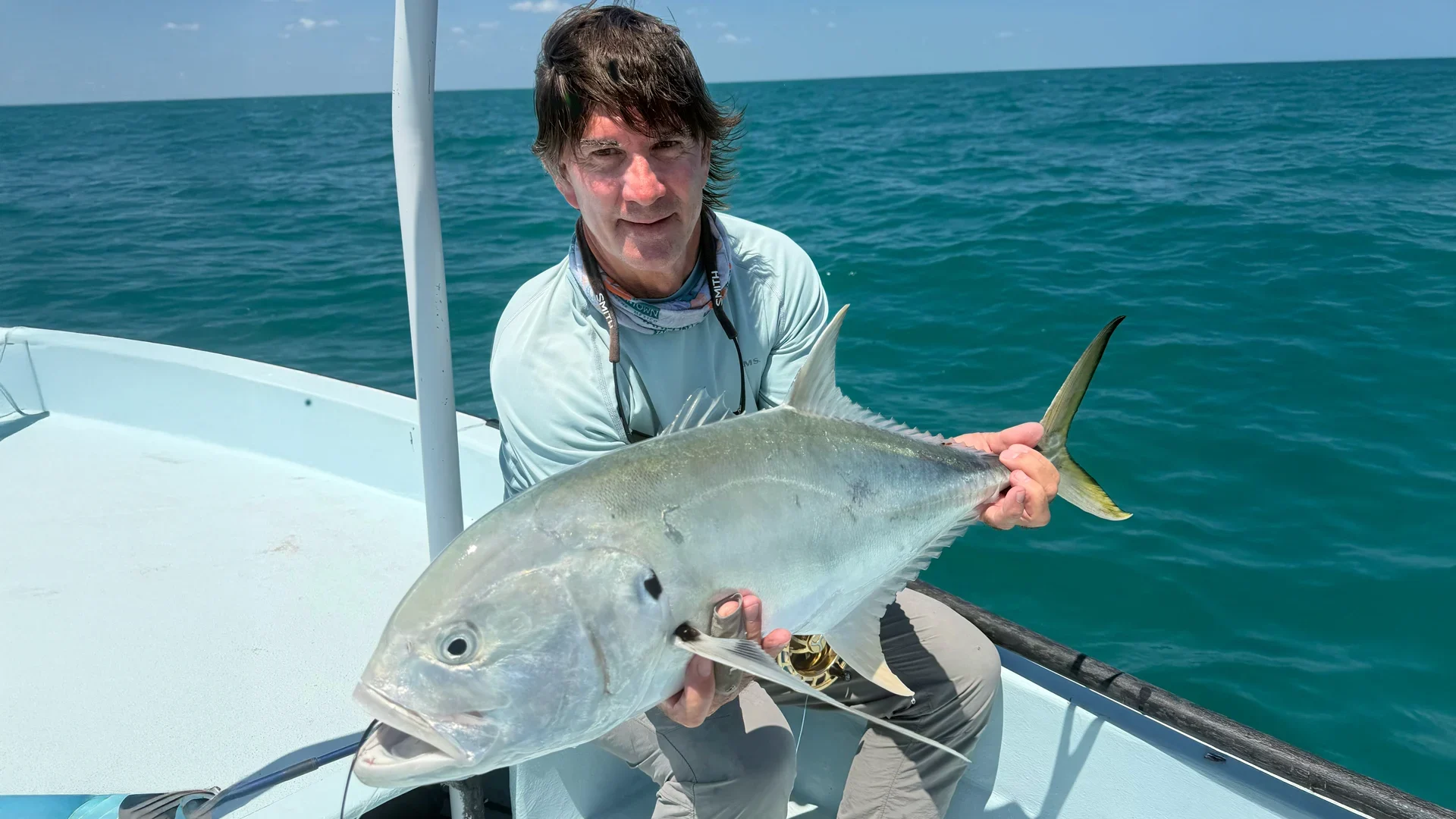
Brad Staples with a Jack Crevalle
Jack crevalle are one of the hardest-fighting fish in the ocean for their size. This fish immediately made several powerful runs and eventually dove beneath the boat. What followed was a ten-minute tug-of-war before I finally brought the fish to hand. The jack weighed approximately 15 pounds and was every bit as strong as its reputation suggests.
After a quick photo, we released the fish, and it swam away healthy and strong. While I didn't land the big tarpon we were looking for that day, the jack crevalle provided a memorable finish to the afternoon.
The following morning, I met Carlos at the beach, and we decided to make another attempt at finding adult tarpon. The wind was still blowing, but we were hopeful that we could locate a few schools.
We found a couple of groups of rolling tarpon, but the wind made it difficult to position the boat and get a quality cast to the fish. After spending some time searching without much success, Carlos suggested that we head into the mangroves and get out of the wind.
We crossed over to the mainland and fished several lagoons that looked promising, but we were unable to find any tarpon. From there, we moved to another area where we located several schools of fish in the 5- to 12-pound range. The tarpon were extremely spooky, making them difficult to approach. I managed to hook a couple of fish and landed one before the schools disappeared.
Later in the day, we explored another area near the island where a group of 15 to 20 pink flamingos stood feeding in the shallows. It was a beautiful sight and a reminder that Holbox offers much more than just great fishing.
Holbox Pink Flamingoes
Holbox Morning Launch
We spent the remainder of the afternoon fishing narrow channels that resembled small creeks, with water moving quickly through the mangroves. Carlos switched me to a chartreuse-and-white Clouser Minnow, believing the heavier fly would sink more effectively in the current. The change paid off, and I landed another tarpon on the Clouser.
Before long, it was time to head back to the beach and conclude my final day on the water. If I remember correctly, I hooked three or four tarpon and landed two. It wasn't the big adult tarpon we had hoped for, but it was still a fun day of fishing and a fitting end to my time on Holbox Island.
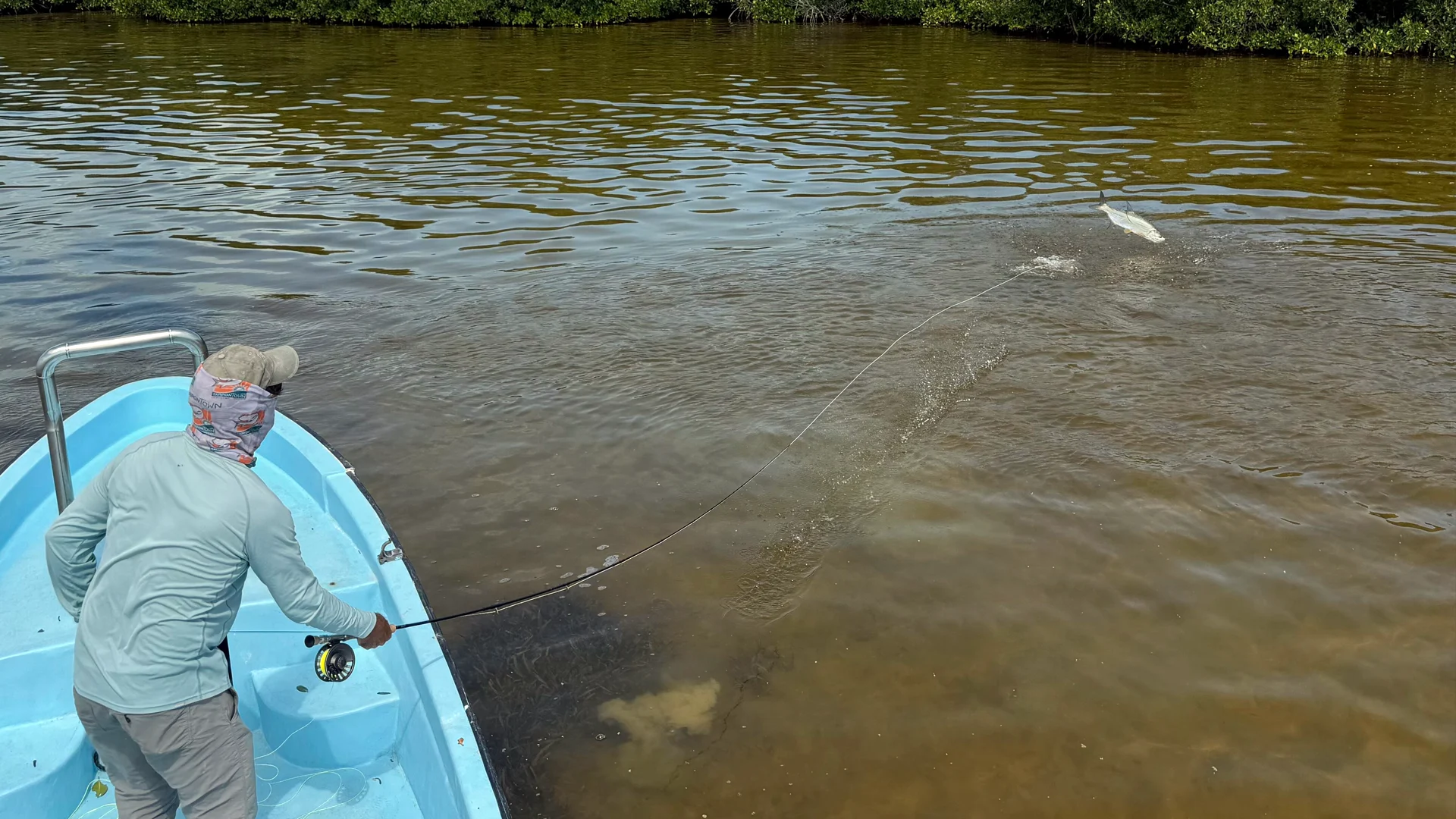
Baby Tarpon Action
That evening, I enjoyed a dinner of chicken fajitas before returning to the hotel to pack for the next stage of my trip.
The following morning, I checked out of the hotel and took a taxi to the ferry terminal in time for the 9:30 a.m. departure back to Chiquilá. After arriving on the mainland, I spent a little time at the marina before my driver, Victor, arrived for the journey south.
My destination was Campeche, Mexico, where I would spend the next three weeks fishing for tarpon with our Fishing with Larry guests. While Holbox had provided a fun mix of baby tarpon, a few shots at larger fish, and even a hard-fighting jack crevalle, I was looking forward to seeing what the next adventure would bring.
Overall, I enjoyed my time on Holbox Island. The fishing was fun, the people were friendly, and the island offered a relaxed atmosphere that made it easy to unwind after a day on the water. I would certainly consider returning in the future.
For anglers interested in fishing Holbox Island, I would recommend targeting baby tarpon from April through late November. If your goal is to pursue larger adult tarpon, the prime season is generally July through September.
One of the advantages of fishing with the Holbox operation is its flexibility. Rather than purchasing a fixed package, anglers can book the number of guided fishing days that best fit their schedule and budget. Lodging, meals, and other travel expenses are arranged separately, allowing visitors to customize the trip to their individual preferences.
Whether you are looking for steady action with baby tarpon on the fly or with spinning equipment, or the challenge of casting to large adult fish, Holbox Island offers a unique tarpon fishery in a beautiful setting. Combined with friendly guides, comfortable accommodations, and easy access from Cancun, it is a destination worth considering for anglers seeking a different tarpon experience in Mexico.
Guy Schoenborn and I are always available to answer any questions that you have regarding this unique tarpon fishing destination.
Brad Staples
Cell: (503) 250-0558
1-800-205-3474 ext. 3
Email: brad@fishingwithlarry.com
Guy Schoenborn
Cell: (406) 698-0874
1-800-205-3474 ext. 1
Email: guy@fishingwithlarry.com
Request a Holbox Island
Information Packet

